August 11, 2026
The Decentralized Public Square: Free Speech in the Web3 Era
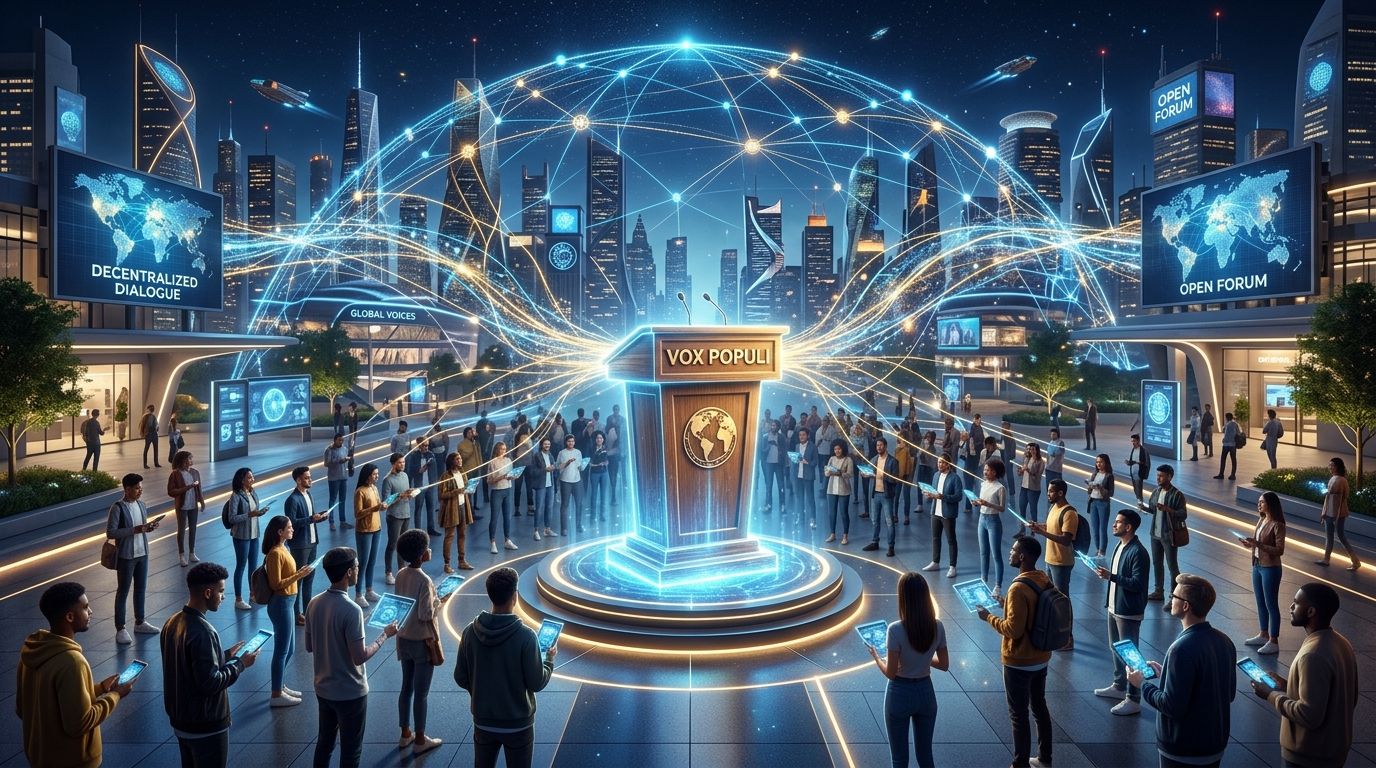
For decades, the internet promised a truly decentralized medium for human expression. Anyone with a computer and an internet connection could theoretically publish their thoughts to a global audience. However, the modern web has become highly centralized. A handful of private corporations control the primary platforms of public discourse, deciding who can speak, what can be seen, and how information is distributed. This centralization has sparked a major movement toward a decentralized public square, powered by Web3 technologies and open-source protocols.
The Rise of Private Gatekeepers
Under Web 2.0, the public square was outsourced to private entities. While these platforms allowed billions of people to connect, they also introduced significant vulnerabilities. Single points of failure, proprietary algorithms, and corporate incentives now dictate the boundaries of free expression. Content moderation policies, often opaque and inconsistently applied, have led to widespread accusations of political bias and censorship. When a single company can unilaterally remove an individual or an entire community from the digital sphere, the concept of a free public square is seriously compromised.
This corporate centralization has also commodified user attention. Algorithms designed to maximize screen time prioritize divisive and sensationalist content, distorting public discourse. The business model of surveillance capitalism means that user data is harvested and profile metrics are manipulated to serve targeted ads. In this environment, the user is no longer a citizen in a democratic public square, but a product in a digital marketplace. Reclaiming the public square requires a fundamental restructuring of the internet's architecture.
What is a Decentralized Public Square?
A decentralized public square is built on open-source protocols rather than proprietary platforms. In this model, data is not stored in a single corporate database but distributed across a network of independent nodes. Technologies like Mastodon (using the ActivityPub protocol), Bluesky (using the AT Protocol), and Nostr represent this shift. In a decentralized network, users own their identity, their data, and their social graph. If they disagree with the policies of one particular server, they can easily move their profile and followers to another server without losing their digital footprint.
This portability changes the power dynamic between users and administrators. In centralized platforms, the threat of deplatforming forces compliance with corporate guidelines. In decentralized networks, the threat of user exit forces server administrators to remain accountable and transparent. Furthermore, open protocols allow for a diversity of algorithmic feeds. Instead of being forced to consume a single algorithm designed to trigger outrage, users can choose feeds that prioritize educational content, chronological updates, or specific topics of interest.
Content Moderation in a Serverless World
However, decentralization introduces significant moderation challenges. Without a central authority to enforce community guidelines, managing hate speech, harassment, and malicious spam becomes difficult. If anyone can host a node, how do we prevent the spread of illegal or harmful content? The decentralized solution relies on federated moderation. Individual server operators establish their own rules, and servers can choose to block or limit communication with other servers that allow harmful behavior. This creates a system of organic consensus rather than top-down enforcement.
While this approach protects free speech from central censorship, it can also lead to fragmentation. If servers block one another, the internet may split into ideological islands, exacerbating the problem of polarization. The challenge for Web3 architects is to build protocols that facilitate robust, cross-server dialogue while equipping individual users with tools to filter out harassment. Moderation must become a decentralized utility, controlled by the end-user rather than a corporate board.
Conclusion: The Future of Digital Liberty
The transition to a decentralized public square is not just a technical upgrade; it is a vital step toward preserving digital liberty. By moving away from corporate silos and embracing open protocols, we can rebuild a public square that is censorship-resistant, privacy-respecting, and owned by the community itself. As we move forward, supporting decentralized alternatives is essential to ensuring that the digital home of free speech remains open to all.
As citizens of the digital age, we must actively participate in this decentralization. By hosting nodes, contributing to open-source code, and moving our public discourse to federated networks, we can ensure that our fundamental rights to free speech and open debate are protected from the whims of centralized power.
← Back to Home